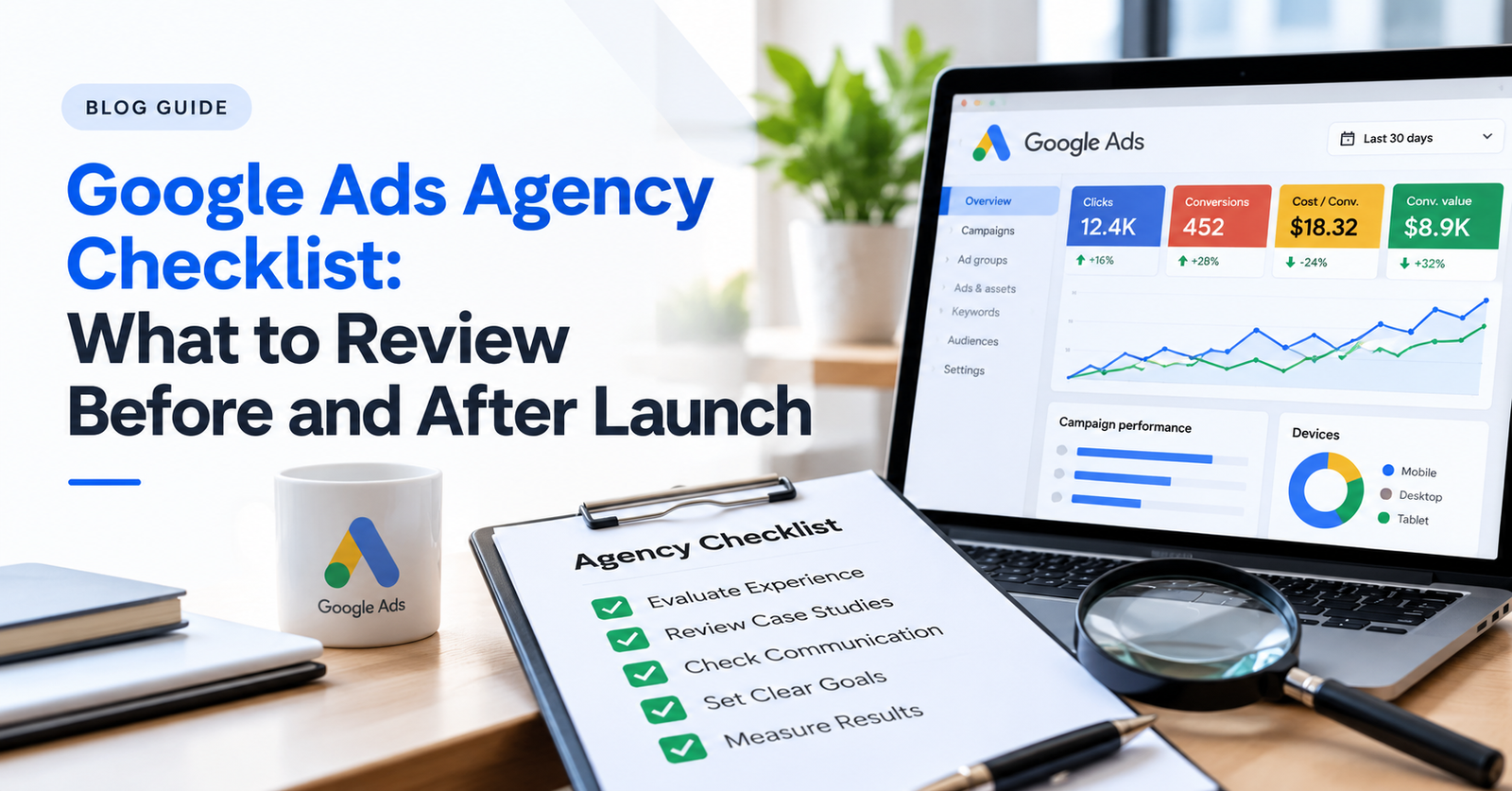
Google Ads Agency Checklist: What to Review Before and After Launch
Choosing the right Google Ads agency can make a significant difference in how effectively your business uses its advertising budget. But hiring an agency involves more than comparing prices or looking at impressive case studies. You need a partner who understands your business goals, communicates clearly, tracks meaningful results, and provides a transparent plan for growth.
So, how do you know whether a Google Ads agency is right for your business?
This checklist will help you evaluate potential agencies before hiring, understand what to expect before your campaigns launch, and assess whether your agency is delivering value after launch.
1. Before Hiring a Google Ads Agency: What Should You Look For?
Before committing to an agency, evaluate its approach, experience, and ability to understand your business.
Does the Agency Understand Your Business Goals?
A reliable Google Ads agency should understand your products or services, target audience, competitors, budget, and definition of success before recommending a strategy.
For example, a local service business may want more qualified inquiries, while an e-commerce company may prioritize profitable sales. Each requires a different approach to campaign planning and performance measurement.
Before hiring, ask:
- How will you determine whether Google Ads is right for my business?
- Which metrics will you use to measure success?
- How will you understand my target audience and competitors?
- What information do you need before developing a strategy?
Be cautious if an agency recommends the same strategy to every client without understanding their individual needs.
Does the Agency Have Relevant Experience?
Industry experience can help an agency understand customer behavior, competition, and campaign challenges. However, experience alone is not enough. Look for evidence that its work has contributed to meaningful business outcomes.
Ask for relevant case studies that explain the client’s original challenge, the approach taken, and the results achieved. Look beyond clicks and impressions to outcomes such as qualified leads, sales, or acquisition costs.
No agency can guarantee specific results because performance depends on factors such as competition, budget, pricing, and website quality.
Are Pricing and Account Ownership Transparent?
Before signing a contract, make sure you understand the management fees, advertising budget, contract terms, reporting frequency, and any additional costs.
Your business should generally retain ownership of its Google Ads account and appropriate access to campaign data.
Ask who will manage your campaigns, how often you will receive updates, and what happens if you decide to change providers. Clear expectations help build a productive working relationship.
You can also explore the Google Ads platform to understand the advertising tools your agency will use.
2. Before Campaign Launch: What Should Your Agency Prepare?
Once you have selected an agency, the next step is ensuring your business is ready to advertise.
Is There a Clear Campaign Strategy and Budget?
A professional Google Ads agency should explain which products or services it recommends promoting, which audiences it plans to target, and how the advertising budget will be allocated.
Before launch, confirm that:
- Campaign goals and priorities are documented.
- The target locations and audiences match your business.
- The advertising budget has been approved.
- Expected performance and limitations have been discussed.
- The agency has explained how it will evaluate early results.
A trustworthy agency will communicate realistic expectations instead of promising immediate leads or sales without sufficient information.
Can the Agency Track Meaningful Results?
Conversion tracking helps you understand whether advertising generates actions that matter to your business, such as phone calls, contact forms, appointments, or purchases.
Ask your agency how it plans to measure these outcomes and verify that the tracking works before campaigns go live.
Google’s conversion tracking guide explains how advertisers can measure valuable customer actions.
This is particularly important because clicks alone do not demonstrate business success. Your agency should be able to explain how it will distinguish genuine business opportunities from less valuable interactions.
Is Your Website Ready to Convert Visitors?
Even a well-managed campaign can struggle if visitors encounter a confusing or unreliable website.
Ask your agency to review whether your landing pages clearly explain your offering, work on mobile devices, and make it easy for visitors to take the next step.
Forms, phone numbers, booking links, and checkout processes should work correctly. If your website needs significant improvements, clarify whether those changes are included in the agency’s services or require additional investment.
3. After Launch: How Do You Evaluate Your Google Ads Agency?
Once your campaigns are live, assess the agency based on its communication, decision-making, and progress toward your business goals.
Does the Agency Report Meaningful Results?
A useful report should help you understand how your advertising budget is performing and what the results mean for your business.
Depending on your objectives, important metrics may include:
- Conversions: Leads, bookings, purchases, or other valuable actions.
- Cost per lead or acquisition: The advertising cost associated with generating an outcome.
- Lead quality: Whether inquiries are relevant and likely to become customers.
- Return on ad spend (ROAS): Revenue attributed to advertising relative to ad spend, when reliable conversion values are available.
Your Google Ads agency should explain performance in plain language, compare results against agreed goals, and identify opportunities for improvement.
A report filled with numbers but no insights or recommendations makes it difficult to judge whether your investment is delivering value.
Does the Agency Make Informed Improvements?
Campaign performance changes over time. Your agency should monitor results, identify problems, and explain the reasoning behind important changes.
For example, if a campaign generates many inquiries but few qualified prospects, the agency should investigate whether the targeting, search intent, landing page, or offer needs improvement.
Ask your account manager:
- What have you learned from recent campaign performance?
- What changes have you made and why?
- What are the next priorities?
- How will we evaluate whether those changes worked?
You should not expect major changes every week simply to demonstrate activity. What matters is that decisions are evidence-based and connected to your business goals.
Is Communication Consistent and Honest?
Not every campaign will perform as expected. A reliable agency should explain when results fall short, investigate possible causes, and recommend practical next steps.
Be cautious if the agency consistently avoids difficult conversations, reports only positive metrics, or makes excuses without investigating the underlying issues.
Transparent communication helps you make informed decisions about your budget, expectations, and future advertising investment.
4. Red Flags to Watch for When Choosing a Google Ads Agency
Before committing to an agency, look for warning signs that may indicate a poor fit:
- Guaranteed results: Promises of specific leads, sales, or returns without acknowledging uncertainty.
- Unclear pricing: Vague explanations of management fees or additional costs.
- No measurement plan: A focus on clicks without a clear approach to tracking conversions.
- Limited account access: Reluctance to provide appropriate access to your advertising account.
- Generic reporting: Reports without meaningful analysis or recommendations.
- Poor communication: Unclear responsibilities or difficulty getting answers.
- One-size-fits-all strategies: Recommendations made without understanding your business.
One warning sign does not automatically mean an agency is unsuitable. However, several together should prompt further questions before you sign a contract.
5. Is Hiring a Google Ads Agency the Right Choice for Your Business?
A Google Ads agency may be a good fit if your business needs specialist expertise, more structured campaign management, reliable conversion tracking, or support as advertising activity grows.
However, the decision depends on your goals, budget, internal resources, and readiness to convert advertising traffic into customers.
Before hiring, consider whether you have a clear offer, a suitable website, a budget for both advertising and management, and a process for responding to leads or fulfilling orders.
If these foundations are not in place, a good agency should help you identify what needs attention before increasing advertising spend.
The right partnership is not simply about running ads. It is about developing a strategy that supports your broader business objectives.
Final Thoughts
Choosing a Google Ads agency is about finding a partner who understands your business, communicates openly, measures meaningful results, and makes decisions with your long-term goals in mind.
Use this checklist to compare agencies before hiring and evaluate performance after launch. Ask questions, request evidence, and make sure you understand how your advertising budget will be managed.
At G2C Partners, businesses can explore digital marketing support and learn more about approaches to growing their online presence. The right agency relationship should begin with understanding your goals and building a strategy around them—not simply launching ads.