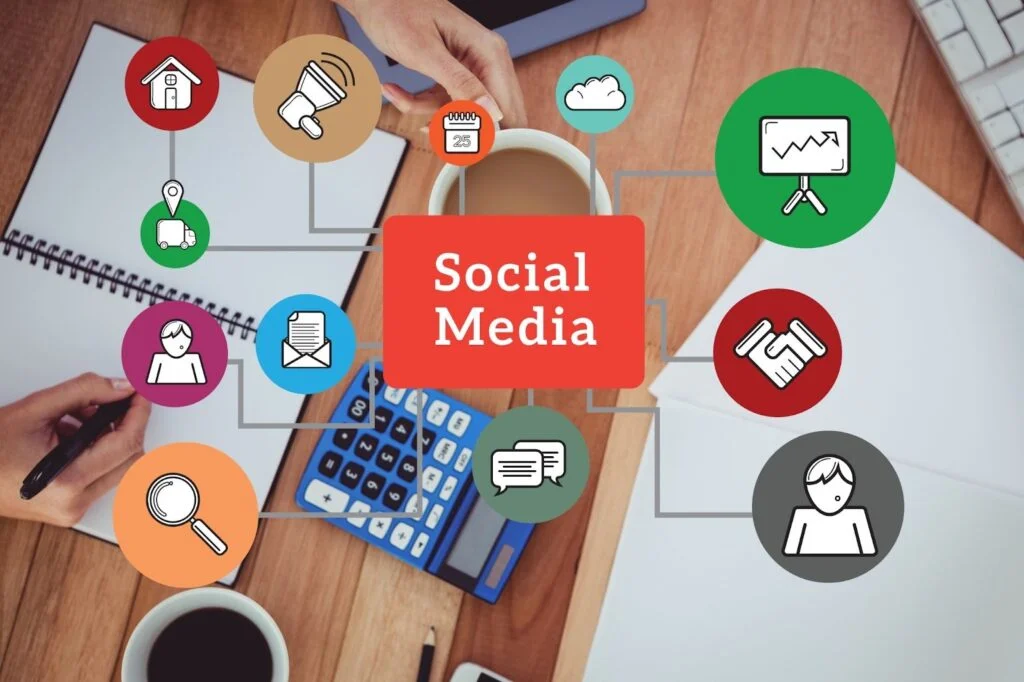
Social media advertising gives small businesses a way to reach potential customers without waiting months to build organic visibility. With the right audience, creative, budget, and tracking, paid social can help businesses generate leads, drive website traffic, increase sales, and build brand awareness.
But running ads is not the same as running an effective advertising strategy.
The real challenge is making sure your budget reaches the right people and that those people have a clear reason to take action.
This guide explains how social media advertising works for small businesses, which strategies can improve performance, and what to consider when choosing a professional social media advertising service.
What Is Social Media Advertising?
Social media advertising is the use of paid campaigns on platforms such as Facebook, Instagram, LinkedIn, TikTok, and Pinterest to reach specific audiences.
Unlike organic social media, where businesses rely primarily on unpaid content and followers, paid advertising allows businesses to control factors such as:
- Audience targeting
- Geographic location
- Budget
- Ad placements
- Creative formats
- Campaign objectives
- Conversion tracking
For a small business, this means advertising can be focused on specific customers rather than trying to reach everyone.
Why Is Social Media Advertising Important for Small Businesses?
Social media advertising can help small businesses reach targeted audiences, generate demand, and measure the results of their advertising spend.
Small businesses often compete against larger companies with bigger marketing budgets. Paid social can help narrow that gap by allowing businesses to focus their budget on specific audiences and locations.
Some of the biggest advantages include:
Targeted Audience Reach
Social platforms provide targeting options based on factors such as location, demographics, interests, behaviors, and previous interactions with a business.
This allows a campaign to be built around the people most likely to be interested in the product or service.
Flexible Advertising Budgets
Small businesses can start with a controlled budget, evaluate performance, and adjust spending based on results.
The goal should not be to spend more simply for the sake of scale. The goal is to identify what works and put more budget behind it.
Measurable Performance
Paid social campaigns can provide data about impressions, clicks, landing-page visits, leads, purchases, and other conversion actions.
That information helps businesses understand which campaigns and creative approaches are producing meaningful results.
Faster Audience Testing
Social advertising can help businesses test different audiences, messages, offers, and creative concepts without committing to one approach indefinitely.
7 Ways to Improve ROI From Social Media Advertising
1. Start With a Clear Business Goal
Before creating an advertisement, determine what the campaign needs to accomplish.
Your objective could be:
- Generate qualified leads
- Increase online sales
- Drive appointments
- Promote a service
- Build awareness
- Increase website traffic
- Retarget previous visitors
The campaign structure, creative, audience, and measurement should all support that objective.
A campaign designed to generate leads should not be evaluated only by likes or impressions.
2. Define Your Ideal Customer
Effective social media advertising starts with understanding who you want to reach.
Consider:
- Where your customers are located
- Their needs and problems
- Their purchasing behavior
- What motivates them to act
- What objections they may have
- What type of content they respond to
For local businesses, geographic targeting can be particularly important.
A business serving customers in specific cities or service areas should not waste advertising budget reaching people outside its market.
3. Choose the Right Social Platform
Not every business needs to advertise on every platform.
The right choice depends on your audience, product, service, and campaign objective.
| Platform | Often Suitable For |
|---|---|
| Local businesses, services, B2C brands | |
| Visual brands, lifestyle, e-commerce, services | |
| B2B, professional services, business decision-makers | |
| TikTok | Short-form video and younger audiences |
| Lifestyle, home, fashion, and visual products |
The best platform is not necessarily the one with the largest audience.
It is the platform where your potential customers are most likely to notice, engage with, and act on your offer.
4. Build Creative Around the Customer
People do not stop scrolling because an advertisement says, “We provide quality services.”
They stop when something feels relevant to them.
Strong social media ads often address:
- A problem
- A desired outcome
- A common frustration
- A specific need
- A compelling offer
- A useful solution
For example, instead of:
“Professional Home Improvement Services”
a more customer-focused message could be:
“Ready to Give Your Home a Fresh Look?”
The creative should make the value clear within seconds.
Use a combination of:
- Static graphics
- Short-form video
- Carousels
- Testimonials
- Product demonstrations
- Before-and-after content
- Educational content
Then test which formats and messages generate the strongest response.
5. Use Retargeting to Reconnect With Interested Customers
Not everyone converts the first time they see an advertisement.
A person might:
- See an ad
- Visit your website
- Look at a service
- Leave without contacting you
Retargeting allows businesses to reconnect with people who have already interacted with their brand.
Depending on the campaign and platform, retargeting audiences can include people who:
- Visited your website
- Viewed specific pages
- Watched your videos
- Engaged with social content
- Added products to a cart
- Previously interacted with your business
This can help move potential customers further through the buying journey.
6. Track Conversions, Not Just Clicks
Clicks are useful, but they do not necessarily represent business growth.
A better measurement framework is:
Ad → Landing Page → Conversion → Qualified Lead → Customer
Depending on the business, conversions could include:
- Phone calls
- Lead forms
- Appointment requests
- Purchases
- Quote requests
- Sign-ups
- Bookings
Proper tracking allows businesses to understand which campaigns are contributing to actual business results.
Without reliable tracking, it becomes much harder to determine whether advertising is producing a return.
7. Test and Optimize Continuously
A campaign that performs well today may not perform the same way several weeks later.
Audience behavior, creative fatigue, competition, offers, and costs can all change.
That is why effective social media advertising services should include ongoing optimization.
This can involve testing:
- Headlines
- Primary text
- Images
- Videos
- Offers
- Audiences
- Placements
- Landing pages
- Budget allocation
The objective is not to change everything at once.
It is to identify what is working, learn from the data, and improve the campaign systematically.
How Much Should a Small Business Spend on Social Media Ads?
There is no single advertising budget that works for every small business.
The right budget depends on:
- Industry
- Target market
- Location
- Competition
- Average customer value
- Campaign objective
- Conversion rate
- Cost per lead or purchase
A small business should start with a budget that allows enough data to be collected while remaining financially comfortable.
Instead of asking only:
“How much should we spend?”
ask:
“What does a customer or qualified lead mean to our business, and what acquisition cost can we support?”
That gives you a much better basis for determining your advertising budget.
How Do You Know If Social Media Ads Are Working?
The answer depends on the campaign objective.
For a lead-generation campaign, useful metrics may include:
- Cost per lead
- Number of leads
- Qualified leads
- Conversion rate
- Cost per qualified lead
For an e-commerce campaign:
- Purchases
- Cost per purchase
- Conversion rate
- Revenue
- Return on ad spend
For an awareness campaign:
- Reach
- Frequency
- Video views
- Engagement
- Brand-related actions
The most important metric is the one that connects advertising performance to the actual business goal.
Social Media Advertising vs. Organic Social Media
Paid and organic social media serve different purposes.
Organic social media helps businesses build relationships, share useful content, establish credibility, and maintain an active presence.
Paid social media advertising allows businesses to put specific messages in front of targeted audiences and scale campaigns based on performance.
For many businesses, using both creates a stronger overall strategy.
Organic content can build trust, while paid campaigns can help distribute offers and content to audiences beyond existing followers.
Should a Small Business Hire a Social Media Advertising Agency?
Small businesses can manage their own advertising, particularly when campaigns are simple.
However, professional management can become valuable when a business needs:
- Multiple campaigns
- Advanced audience targeting
- Conversion tracking
- Retargeting
- Creative testing
- Ongoing optimization
- Multi-platform advertising
- Performance reporting
A professional social media advertising agency can help manage the process from campaign planning and creative development through testing, optimization, and reporting.
The goal should not simply be to outsource ad management.
It should be to build a system that makes advertising decisions based on data and business outcomes.
How G2C Partners Helps Businesses With Social Media Advertising
At G2C Partners, we approach social media advertising as part of a broader digital marketing strategy.
Our approach can include:
- Audience and market research
- Campaign strategy
- Paid social campaign management
- Ad creative and messaging
- Retargeting
- Conversion tracking
- Campaign testing
- Performance analysis
- Ongoing optimization
We work with businesses that need more than simply having ads running. The focus is on connecting audience, creative, media, website experience, and conversion data.
When these pieces work together, businesses have a clearer understanding of what is driving results and where their marketing budget can work harder.
Final Thoughts
Social media advertising can be a valuable growth channel for small businesses, but successful campaigns require more than attractive graphics and a daily budget.
The strongest results usually come from understanding the customer, choosing the right platform, creating relevant messaging, tracking meaningful conversions, and continuously improving the campaign.
Better targeting gets you in front of the right people. Better strategy helps turn that attention into business.